
Walk into any specialty coffee shop from Seattle to New York, and your eyes are immediately drawn to the gleaming metal apparatus hissing on the counter. The espresso machine is the beating heart of modern coffee culture, but for many home brewers and aspiring baristas, the mechanics hidden beneath those sleek stainless-steel panels remain a mystery.
Whether you are looking to bring café-quality beverages into your own kitchen or you simply want to understand the intricate science behind your morning Americano, understanding how an espresso machine operates is the first step toward coffee mastery. In this comprehensive guide, we will pull back the curtain on the history, mechanics, and distinct categories of these remarkable brewing devices.
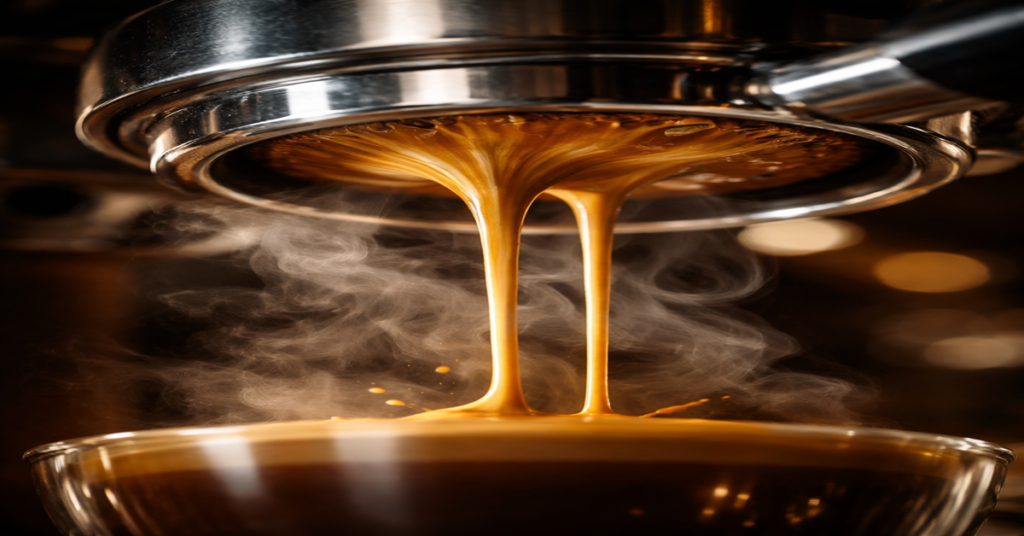
Quick Summary
- The Core Definition: An espresso machine brews highly concentrated coffee by forcing pressurized, near-boiling water through a tightly packed puck of finely ground coffee beans.
- The Golden Standard: True espresso requires approximately 9 bars of pressure (about 130 PSI) to achieve optimal extraction and produce rich crema.
- Four Main Categories: Brewing systems are generally divided into Steam-driven, Lever-driven, and Pump-driven models (which include semi-automatic, automatic, and super-automatic variations).
- The Pump Revolution: Modern commercial and high-end home setups rely on vibratory, rotary, or geared pumps to ensure absolute pressure stability during the extraction process.
Table of Contents
- The Origins: A Brief History of Pressurized Brewing
- The Core Mechanics: How Does It Work?
- Steam-Driven Systems: The Budget Entry Point
- Lever-Driven Systems: The Steampunk Purist’s Choice
- Pump-Driven Systems: The Modern Industry Standard
- Understanding Automation: Semi, Auto, and Super-Auto
- The Hidden Engine: Pump Types Explained
- Data Comparison Table: Which System is Right for You?
- Final Thoughts on Choosing Your Setup
- Frequently Asked Questions (FAQ)
1. The Origins: A Brief History of Pressurized Brewing
To truly appreciate the modern espresso machine, we must look back to late 19th-century Italy. As the industrial revolution accelerated the pace of life, workers needed their caffeine delivered much faster than traditional percolation methods allowed.
In 1884, an inventor named Angelo Moriondo from Turin stepped up to the challenge, patenting the world’s first steam-driven coffee beverage device. While revolutionary, Moriondo’s invention was designed to brew large bulk batches rather than the individual, made-to-order cups we expect today.
The concept was refined in 1901 when Luigi Bezzera of Milan patented a series of mechanical improvements that allowed for single-serving rapid extraction. His patents were soon acquired by Desiderio Pavoni, who brought the technology to the masses. However, it wasn’t until 1945 that Achille Gaggia introduced the spring-piston lever system, fundamentally changing the game by increasing the pressure high enough to create “crema”—the golden, aromatic foam that defines true espresso.
2. The Core Mechanics: How Does It Work?
Regardless of the brand or the price tag, every espresso machine aims to accomplish the exact same physical reaction. The device must heat water to an optimal temperature window—generally between 195°F and 205°F—and force it through a densely compacted bed of finely ground coffee beans.
This compacted bed, commonly referred to as the “puck,” sits inside a metal filter basket attached to a portafilter. The high pressure acts as a powerful solvent, rapidly extracting oils, sugars, and complex flavor compounds in a matter of seconds. If the pressure is too low, the resulting liquid is weak and under-extracted. If the temperature is too high, the coffee becomes harsh, astringent, and distinctly bitter.
3. Steam-Driven Systems: The Budget Entry Point
If you have ever purchased an entry-level countertop coffee maker for under fifty dollars, chances are you bought a steam-driven unit.
How Steam Systems Operate
These devices function very similarly to a traditional stovetop Moka pot. Inside a sealed internal chamber, water is brought to a rolling boil to generate steam. As the steam expands, it creates internal pressure that physically pushes the boiling water out of the reservoir and through the coffee grounds.
The Limitations
While highly affordable and compact, steam-driven setups suffer from two massive scientific drawbacks. First, they max out at roughly 1 to 1.5 bars of pressure, falling drastically short of the 9 bars required for genuine espresso extraction. Second, because the system relies on boiling water to generate the necessary steam, the water hitting the coffee grounds is often far too hot. This nearly guarantees over-extraction, resulting in a dark, bitter beverage lacking the nuanced flavor clarity found in specialty cafes.
4. Lever-Driven Systems: The Steampunk Purist’s Choice
For those who view coffee preparation as a tactile, artisanal craft, the lever-driven espresso machine remains the holy grail. These mechanical marvels require physical muscle to operate and are split into two distinct mechanical designs: manual pistons and spring-loaded pistons.
Manual vs. Spring-Loaded
In a manual lever setup, the horizontal resting position of the handle dictates the flow. When the barista raises the lever, a valve opens, allowing pre-heated water from the boiler to silently saturate the coffee puck—a phase known as pre-infusion. By physically pulling the lever downward, the operator manually forces the water through the grounds. The barista has 100% control over the pressure profile, making real-time adjustments based on the resistance they feel.
Spring-piston designs operate slightly differently. Pulling the lever downwards compresses an internal heavy-duty coil spring and raises the piston. When the barista releases the lever, the tension of the expanding spring drives the piston down, consistently applying roughly 8 to 10 bars (116 to 145 PSI) of pressure.
The Pros and Cons
This is where the term “pulling a shot” originates. Lever systems offer unparalleled control, allowing experienced users to manipulate extraction profiles to highlight specific tasting notes in single-origin beans. However, this absolute control comes at the cost of consistency. Without electronic thermal regulation, managing the heat of the grouphead across multiple consecutive shots requires an incredibly steep learning curve.
5. Pump-Driven Systems: The Modern Industry Standard
The 1960s ushered in the era of the pump-driven espresso machine, a technological leap that effectively standardized the coffee industry. By utilizing electronic motorized pumps instead of manual force or steam expansion, these devices effortlessly generate a stable, continuous 9 bars of pressure. Today, nearly every commercial cafe and high-end home kitchen utilizes pump-driven technology.
Within the pump-driven universe, the equipment is categorized by how much of the brewing process is handed over to internal computers.
6. Understanding Automation: Semi, Auto, and Super-Auto
When shopping for a modern espresso machine, you must decide how involved you want to be in your morning ritual.
Semi-Automatic Machines
This is the standard for professional baristas and serious home hobbyists. A semi-automatic unit regulates the water temperature and utilizes a pump to deliver consistent pressure, but the human operator remains in charge of the craft. The barista must grind the beans, carefully tamp the puck into the portafilter, lock it into the grouphead, and manually start and stop the extraction via a switch or button. It offers the perfect marriage of mechanical reliability and human artistry.
Automatic Machines
Automatic units share the exact same internal architecture as semi-automatics, with one major upgrade: volumetric flowmeters. The barista still preps the portafilter, but once the extraction button is pressed, the internal computer measures the exact volume of water passing through the coffee and automatically stops the shot when the programmed yield is reached. This is a massive advantage in a high-volume coffee shop, allowing the barista to step away and steam milk without fear of the cup overflowing.
Super-Automatic Machines
For environments where convenience trumps craft—such as office breakrooms or busy households—the super-automatic reigns supreme. These are literal “bean-to-cup” robots. The user simply presses a button on a touchscreen interface. The device internally grinds whole beans, doses the correct amount, tamps the grounds mechanically, pulls the shot, and ejects the spent puck into an internal waste bin. While they offer unbeatable convenience, they strip away the user’s ability to fine-tune the variables, often resulting in a decent, but rarely mind-blowing, cup of coffee.
7. The Hidden Engine: Pump Types Explained
Just because two machines use an electronic pump does not mean they perform identically. The type of pump housed deep inside the chassis drastically impacts both the lifespan of the equipment and the quality of the extraction.
- Vibratory (Vibe) Pumps: Commonly found in entry-level and mid-range home equipment, vibe pumps use an electromagnetic coil to push a piston back and forth at high speeds. While inexpensive and easy to replace, they are relatively loud and operate at a fixed pressure curve, slowly ramping up from 4 bars to an often excessive 15 bars by the end of the shot.
- Rotary Pumps: The backbone of commercial setups. Rotary pumps use a spinning motorized impeller to move water. They are whisper-quiet, incredibly durable, and deliver instantaneous, unwavering pressure from the very first second of extraction. Furthermore, they allow the machine to be directly plumbed into a dedicated water line.
- Geared Pumps: Reserved for the absolute highest tier of specialty equipment, geared pumps work in tandem with advanced computer software. They allow the barista to program complex, variable pressure profiles—such as starting at 3 bars, ramping up to 9, and gently tapering off to 6 bars at the end—unlocking unprecedented flavor manipulation.
8. Data Comparison Table: Which System is Right for You?
To help you make an informed decision, here is a breakdown of how the different classes stack up against one another in a real-world environment.
| Machine Category | Pressure Generation | Human Skill Required | Consistency Level | Price Bracket | Best Suited For |
| Steam-Driven | Boiling Water Expansion | Low | Poor | $ | Budget-conscious beginners |
| Lever-Driven | Manual / Spring Force | Extremely High | Variable | $$$ | Purists & tactile hobbyists |
| Semi-Automatic | Electronic Pump | High | Excellent | $$to$$$$ | Home baristas & craft cafes |
| Automatic | Electronic Pump | Medium | Perfect | $$$to$$$$ | High-volume coffee shops |
| Super-Automatic | Internal Robotics | Zero | Good | Offices & convenience seekers |
9. Final Thoughts on Choosing Your Setup
The technology behind the modern espresso machine is constantly evolving. Today, manufacturers are integrating advanced PID temperature controllers, pneumatic pressure profiling, and even smartphone connectivity into their designs. However, beneath the digital touchscreens and polished chrome, the fundamental goal remains unchanged from Luigi Bezzera’s original vision: pushing pressurized hot water through ground coffee to extract liquid gold.
When investing in a setup for your own home, it is incredibly easy to be seduced by cutting-edge features. Yet, the best machine for you is not necessarily the most expensive one; it is the one that aligns with your daily routine, your budget, and your willingness to learn the profound science of extraction.
What type of brewing system are you currently using at home, and what is your biggest struggle when pulling a shot? Drop a comment below to join the discussion, and don’t forget to subscribe to our newsletter for more deep dives into the science of specialty coffee!
Check best espresso coffee maker in Amazon
Frequently Asked Questions (FAQ)
1. Is 9 bars of pressure actually necessary for a good espresso?
Yes, 9 bars of pressure is considered the “golden standard” for authentic espresso extraction. This specific amount of pressure (roughly 130 PSI) forces water through the coffee puck at the perfect velocity to emulsify coffee oils and sugars, creating the rich, aromatic crema that defines a true shot. Lower pressure, typical of steam machines, often results in a thin, watery brew.
2. Which type of espresso machine is best for a beginner?
If you want to learn the craft, a semi-automatic espresso machine is the best starting point. It offers a balance of motorized consistency (pressure and temperature) while allowing you to master grinding and tamping. However, if you prefer convenience over craftsmanship, a super-automatic machine is the easiest “set it and forget it” option for home use.
3. What is the primary difference between steam-driven and pump-driven machines?
The main difference lies in pressure and temperature control. Steam machines use internal boiling pressure (only 1–1.5 bars) and often reach temperatures too high for delicate beans, resulting in a bitter taste. Pump-driven machines use an electric pump to provide a steady 9 bars of pressure and maintain a precise temperature range (typically 195°F – 205°F), ensuring a balanced extraction.
4. How long does a quality espresso machine usually last?
A high-end home or commercial-grade espresso machine can last anywhere from 5 to 15 years with proper maintenance. Routine tasks like descaling, backflushing, and using filtered water are essential. Machines built with stainless steel boilers and metal components tend to outlive cheaper plastic models significantly.
5. Can I use regular coffee beans in my espresso machine?
Technically, yes, you can use any roast. However, for the best experience, we recommend using an “Espresso Roast.” Because espresso machines extract coffee very quickly, darker, oily roasts are specifically designed to stand up to the high pressure, providing a sweeter, more syrupy body and a thick, stable crema.